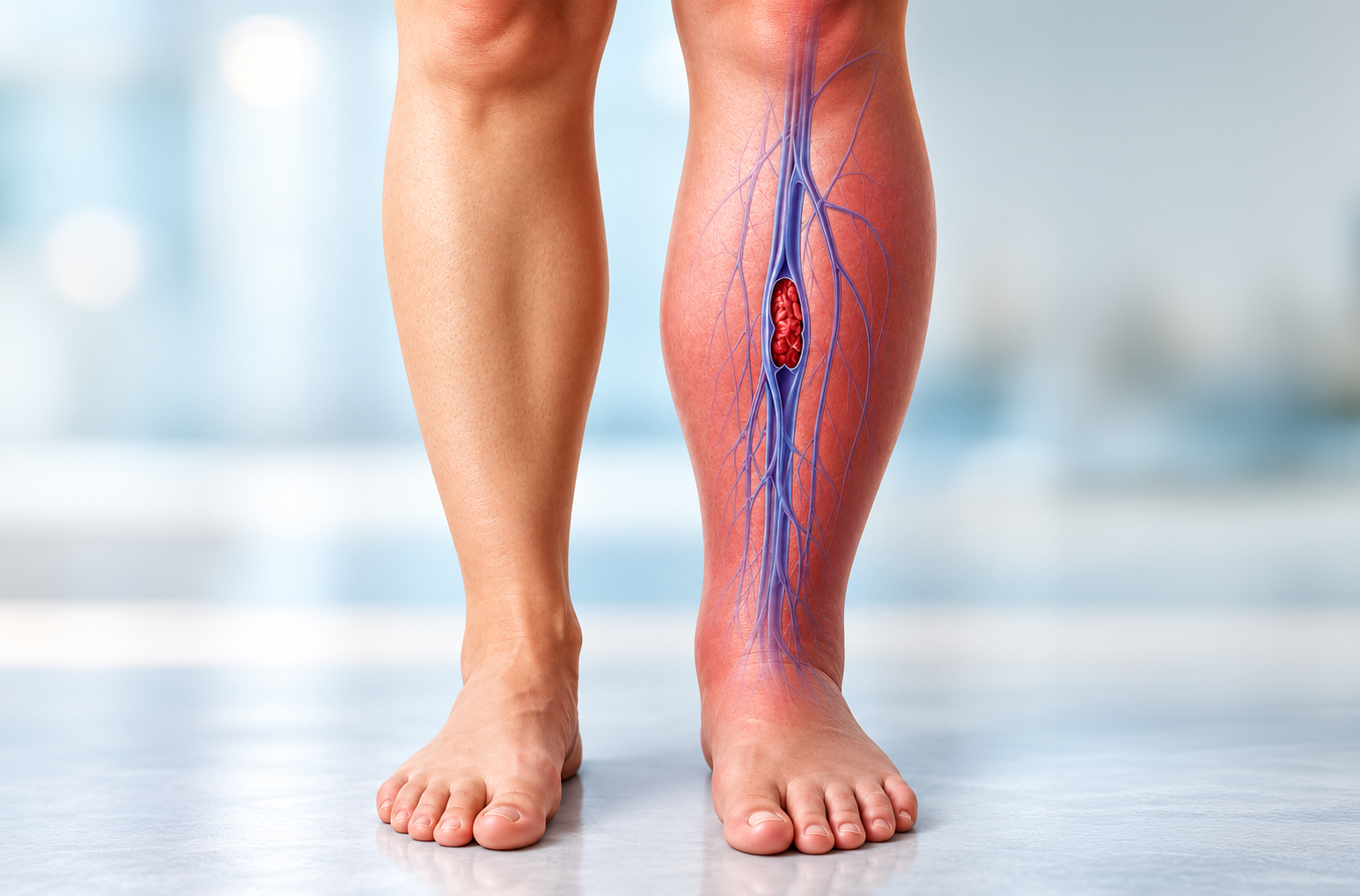
Deep Vein Thrombosis (DVT) is a condition where a blood clot forms in the deep veins, most commonly in the legs. It can partially or completely block blood flow, leading to swelling and pain.
The most serious complication of DVT is pulmonary embolism (PE), where part of a clot can break away and travel to the lungs. Pulmonary embolism can be life-threatening and requires urgent medical attention when symptoms occur.
What Causes Deep Vein Thrombosis?
DVT develops when a blood clot forms in a deep vein, most commonly in the lower extremities. Reduced movement can slow venous blood flow, while surgery, illness and other medical conditions can increase the tendency for blood clot formation.
Several circumstances can increase the risk of DVT, particularly when they lead to prolonged immobility or changes in the body's normal clotting balance.
Risk Factors for DVT
Important risk factors for deep vein thrombosis include:
- Prolonged immobility, including long flights or extended travel
- Recent surgery or hospitalisation
- Obesity
- Smoking
- Pregnancy and the postpartum period
- Use of oral contraceptives or hormone therapy
- Cancer
- Family history of clotting disorders
Having one or more risk factors does not mean that a person will definitely develop DVT. However, new leg symptoms in a person with significant risk factors should be medically assessed.
Symptoms of Deep Vein Thrombosis
DVT may cause symptoms in the affected leg because the clot interferes with normal venous blood flow. Symptoms may develop gradually or appear more suddenly.
- Swelling in one leg, particularly around the calf or lower leg
- Pain or tenderness, often in the calf or thigh
- Warmth over the affected area
- Redness or other changes in skin colour
- Visible or more prominent surface veins
- Unexplained leg discomfort that develops without an injury
Some cases of DVT can be silent and may only become apparent after a complication occurs. This makes awareness of risk factors and appropriate medical assessment particularly important.
Sudden unexplained shortness of breath, chest pain that may worsen with deep breathing or coughing, coughing up blood, rapid heartbeat, dizziness or fainting can be signs of a pulmonary embolism and require immediate emergency medical attention.
How Is DVT Diagnosed?
Diagnosis begins with a clinical assessment of symptoms, medical history and individual risk factors. A healthcare professional may use a clinical assessment to determine which diagnostic tests are appropriate.
Duplex ultrasound is commonly used to examine the deep veins and identify a clot. Blood tests such as D-dimer may provide supportive information in selected patients, while CT or MR venography may be considered when additional anatomical detail is needed.
Duplex ultrasound is generally the key imaging test for suspected DVT in the leg. The choice of additional testing depends on the clinical situation and the location of suspected thrombosis.
Treatment Options for DVT
Treatment depends on the location and extent of the clot, symptoms, risk of complications, bleeding risk and the patient's overall health. Anticoagulant treatment is the mainstay of therapy for most patients with confirmed DVT.
Blood-thinning medicines help prevent the clot from growing and reduce the risk of additional clots. Options may include heparin, warfarin or direct oral anticoagulants depending on the clinical situation.
Compression stockings may be advised in selected patients to help manage ongoing leg symptoms and support venous circulation.
Clot-dissolving treatment may be considered in selected patients with extensive or severe DVT when the potential benefits outweigh the risks.
Selected patients may require catheter-based clot removal or other advanced treatment when clinically appropriate.
The duration of anticoagulant treatment varies according to the circumstances surrounding the clot and the patient's individual risk of recurrence and bleeding. Treatment should therefore be determined and monitored by a qualified healthcare professional.
How Can DVT Be Prevented?
Prevention is especially important during periods when movement is restricted, such as after surgery, during hospitalisation or during prolonged travel. Maintaining movement and following medical advice can help reduce the risk of clot formation.
- Stay physically active as advised
- Avoid prolonged periods of immobility
- Move the legs regularly during long journeys
- Follow medical advice after surgery or hospitalisation
- Use compression stockings when advised
- Maintain a healthy weight
- Avoid smoking
- Take prescribed preventive medication exactly as advised
Recovery and Follow-Up After DVT
Recovery depends on the location and severity of the clot, the treatment used and the patient's overall health. Follow-up is important to monitor treatment, assess symptoms and reduce the risk of recurrence or complications.
Patients should follow their prescribed anticoagulant treatment carefully and seek medical advice if leg swelling, pain or other symptoms worsen or new symptoms develop.
When Should You Consult a Vascular Surgeon?
A vascular assessment is appropriate when unexplained one-sided leg swelling, calf or thigh pain, warmth or skin discolouration develops, particularly when risk factors for DVT are present.
People recovering from surgery or hospitalisation, those with prolonged immobility, cancer, pregnancy, hormone therapy or a history of clotting disorders should discuss concerning symptoms promptly with their healthcare team.
If symptoms suggest pulmonary embolism, including sudden shortness of breath, chest pain, coughing up blood, dizziness or fainting, emergency medical evaluation is required rather than waiting for a routine consultation.