
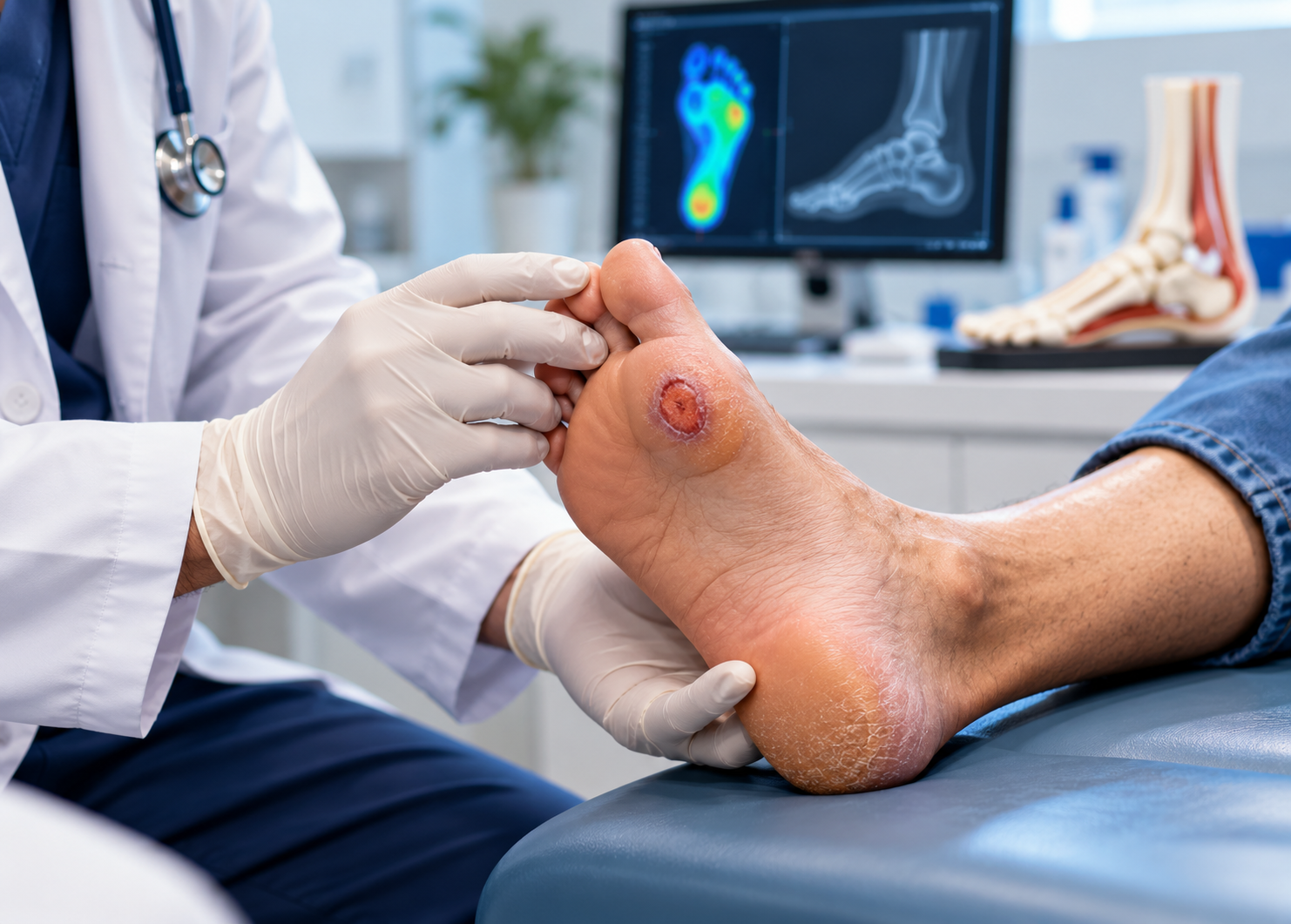
Diabetes can cause neuropathy, poor circulation, and immune dysfunction, leading to foot ulcers, infections and, in severe cases, limb loss. Early multidisciplinary assessment improves healing and reduces amputation risk.
A diabetic foot wound may not heal properly when blood flow to the foot is reduced. Identifying peripheral artery disease early allows the vascular team to assess circulation and determine whether revascularization or other treatment may be needed to support healing.
Risk Factors for Diabetic Foot Problems
Several factors can increase the risk of developing diabetic foot ulcers and complications. Reduced sensation may allow injuries to go unnoticed, while poor circulation can delay healing and increase the risk of infection.
- Peripheral neuropathy
- Peripheral artery disease (PAD)
- Poor glycaemic control
- Previous foot ulcer or amputation
- Foot deformity
- Smoking
- Chronic kidney disease
Up to half of diabetic foot ulcers may have concurrent peripheral artery disease, which can worsen prognosis and interfere with wound healing.
Warning Signs That Need Attention
People with diabetes may not always feel pain from a foot wound because of neuropathy. Regular inspection of the feet and early assessment of any new change are therefore important.
- Non-healing sores or wounds
- Persistent redness or swelling
- Foul-smelling discharge
- Blackened or discoloured tissue
- Increasing pain
- New or worsening numbness
A diabetic foot wound with spreading redness, swelling, discharge, tissue discolouration, increasing pain or other signs of infection requires prompt medical assessment. Reduced circulation can make even a small wound difficult to heal.
How Is Diabetic Foot Disease Diagnosed?
Assessment begins with a detailed examination of the foot, wound and surrounding tissues. The wound is evaluated for size, depth, infection and tissue viability, while circulation is assessed to determine whether adequate blood flow is reaching the affected area.
Vascular assessment may include pulse examination, ankle-brachial index, toe pressures and duplex ultrasound. CT or MR angiography may be considered when more detailed imaging of the arterial circulation is required.
Infection assessment and glycaemic optimisation are also important parts of diabetic foot management. Treatment planning is based on the overall condition of the patient, the wound and the circulation.
Treatment & Limb Salvage
Treatment depends on the wound, infection, tissue viability, circulation and the patient's overall medical condition. Immediate wound care and control of infection are combined with measures aimed at improving pressure distribution and restoring blood flow when required.
Appropriate wound assessment and local care are important for protecting tissue and supporting the healing process.
Removal of unhealthy or dead tissue may be required in selected wounds to support wound management.
Antibiotics may be required when a diabetic foot wound is clinically infected, along with appropriate wound care.
Reducing pressure on the affected area can help protect the wound and support healing.
Endovascular revascularization may be considered to improve blood flow through narrowed or blocked arteries.
Selected patients may benefit from bypass surgery to restore circulation and improve the potential for healing.
Restoring Blood Flow to Support Healing
Many patients with diabetic foot wounds and significant peripheral artery disease may benefit from revascularization. Endovascular treatment such as angioplasty, with or without stenting, can be used in appropriate arterial blockages.
In selected patients, surgical bypass may provide another option for restoring blood flow. The choice between endovascular treatment, bypass or other approaches depends on the arterial anatomy, wound characteristics, overall health and vascular assessment.
Improving blood flow can support wound healing and help preserve a functional limb when significant arterial disease is contributing to the problem. Treatment decisions should be individualised following complete vascular assessment.
What to Expect During Treatment & Recovery
Initial outpatient assessment may lead to a planned day-procedure angioplasty when appropriate. Patients with infected or more complex wounds may require hospital admission for coordinated wound, infection, diabetic and vascular care.
Healing timelines vary considerably. Small and uncomplicated ulcers may heal over several weeks, while complex wounds can require months of coordinated treatment, wound care and vascular follow-up.
When Should You Seek Vascular Assessment?
Patients with diabetes should seek prompt medical assessment when a foot wound does not heal, when there is persistent redness or swelling, when tissue becomes dark or discoloured, or when there are signs of infection or reduced circulation.
Early vascular assessment is particularly important when a diabetic foot wound is not progressing as expected. Identifying peripheral artery disease and treating significant circulation problems can be an important part of a limb-salvage strategy.