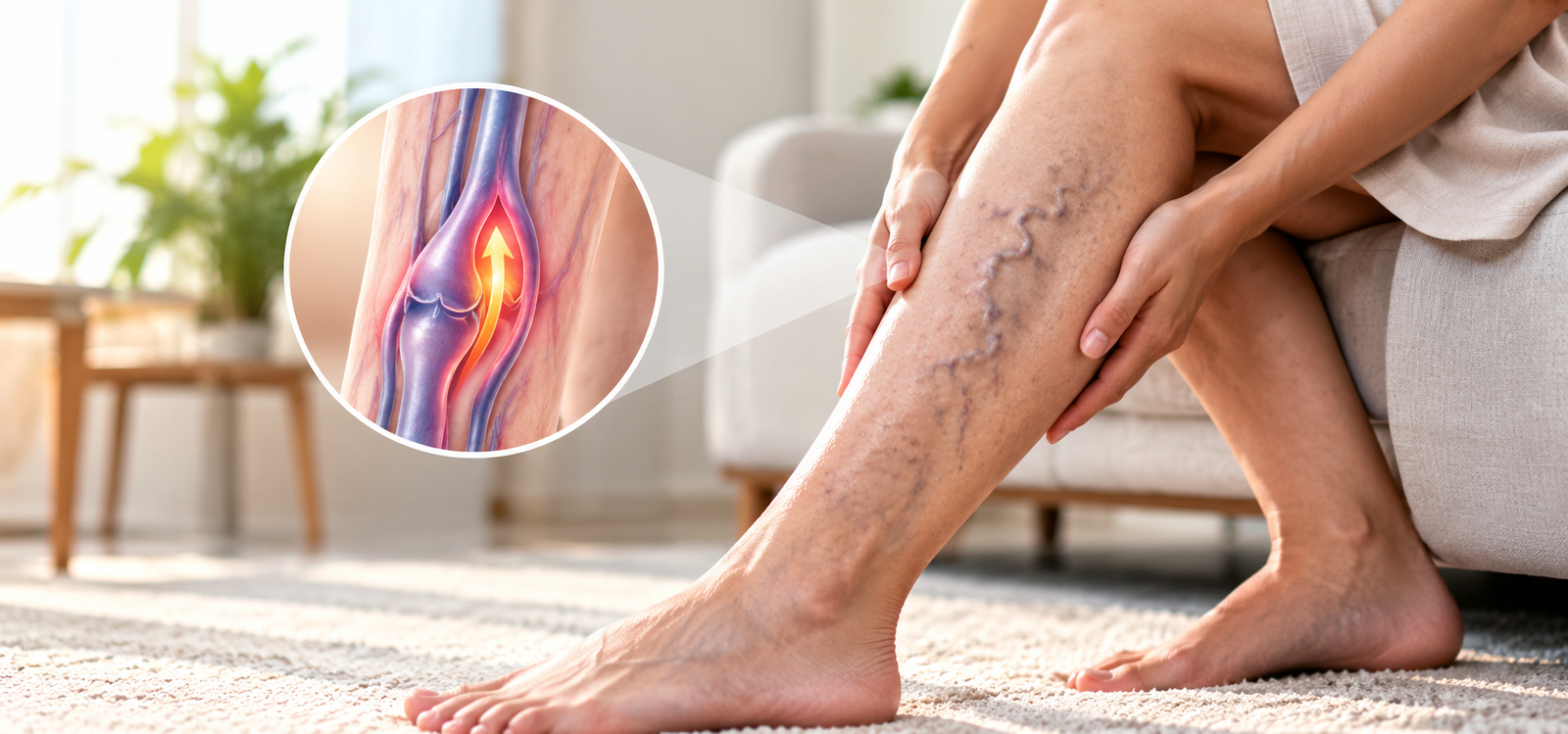
Varicose veins are dilated, tortuous superficial leg veins caused by valve failure and reflux. Blood pools in the legs, leading to aching, heaviness and visible bulging veins. In advanced cases, skin changes, dermatitis, bleeding or ulceration can occur.
Varicose veins can range from a cosmetic concern to a manifestation of chronic venous insufficiency. Persistent symptoms, skin changes or ulcers should be assessed by a vascular specialist.
Common Symptoms of Varicose Veins
Symptoms can vary depending on the severity of venous disease. Some patients notice visible veins first, while others experience discomfort or swelling before the veins become prominent.
- Aching or heaviness in the legs
- Ankle or lower-leg swelling
- Itching around affected veins
- Restless legs or night cramps
- Visible, bulging or twisted veins
- Skin darkening or other skin changes
- Non-healing ulcers in more advanced disease
Advanced Signs of Venous Disease
Chronic venous insufficiency may progressively affect the skin and tissues around the ankle and lower leg. Skin darkening, dermatitis, bleeding and ulceration can indicate more advanced venous disease and should not be ignored.
Rapid leg swelling, sudden severe pain, bleeding from a varicose vein, or signs of infection around a treated area require prompt medical assessment.
How Are Varicose Veins Diagnosed?
Diagnosis begins with a focused clinical examination and a detailed assessment of the patient's symptoms and visible venous changes.
Duplex ultrasound is the standard pre-treatment investigation. It helps map venous reflux, assess vein diameters and guide treatment planning.
Conservative Treatment Options
Treatment is tailored to the individual's symptoms, examination findings and venous disease. Conservative measures can help manage symptoms and support venous circulation.
- Leg elevation
- Compression stockings when advised
- Regular physical activity and exercise
- Weight management
Modern Minimally Invasive Treatments
In appropriate patients, minimally invasive endovenous procedures are commonly used to treat problematic veins. Treatment selection depends on the individual's venous anatomy, reflux pattern, symptoms and overall clinical assessment.
A thermal endovenous treatment used to close an incompetent vein and redirect blood flow through healthier veins.
A minimally invasive thermal technique that uses laser energy to treat an affected vein.
A non-surgical technique in which a sclerosant foam is used to treat selected abnormal veins.
A non-thermal endovenous approach that may be suitable for selected patients following vascular assessment.
Procedure & Recovery
Modern minimally invasive procedures typically take around 20–60 minutes and are performed under local anaesthesia.
Most patients are able to walk on the same day and return to routine activities within a few days. Short-term compression and activity guidance may be provided to support comfort and recovery.
When Should You Consult a Vascular Surgeon?
Consultation is appropriate when varicose veins are associated with persistent aching, heaviness, swelling, itching, skin changes or other symptoms that affect daily life.
Early assessment can help identify the underlying pattern of venous reflux and determine whether conservative management, minimally invasive treatment or another approach is appropriate.