
Foot Gangrene Treatment in Hyderabad for Vascular and Wound Care
Blackened toes, non-healing wounds and increasing foot pain may indicate poor blood circulation or a serious infection. When the affected tissue begins to die, gangrene can develop and requires immediate hospital assessment. Individuals seeking foot gangrene treatment in Hyderabad can consult Dr. Viswanath Atreyapurapu, a vascular and endovascular surgeon, for circulation evaluation and guidance on suitable treatment options based on their condition.
- 12+ Years of Clinical Experience
- MBBS, MS and DrNB (Vascular Surgery)
- Peripheral Arterial Disease Assessment
- Diabetic Foot and Gangrene Wound Care

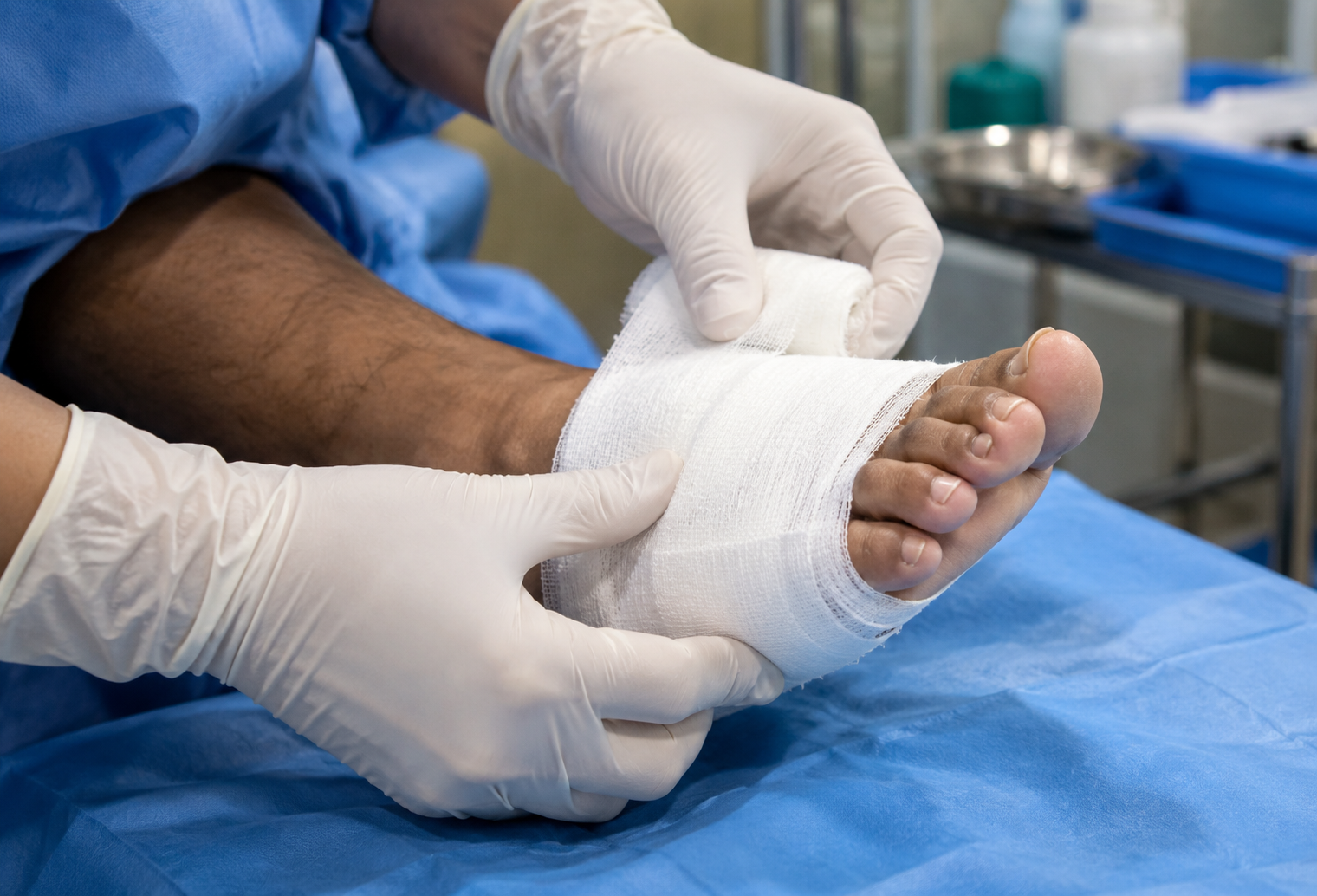
Specialist Vascular Assessment and Foot Gangrene Treatment in Hyderabad
Foot gangrene develops when tissues lose their blood supply or become severely infected, sometimes affecting toes or larger areas of the foot. During evaluation, the doctor examines skin changes, checks pulses and may recommend vascular imaging to identify blocked arteries. For individuals seeking foot gangrene treatment in Hyderabad, the findings help guide decisions about restoring circulation, controlling infection and removing damaged tissue when necessary. Suspected gangrene requires urgent hospital assessment.
What Is Foot Gangrene?
Foot gangrene occurs when part of the foot loses its blood supply or a severe infection destroys tissue. It may begin in a single toe and spread to surrounding areas if the underlying problem remains untreated.
Care focuses on controlling infection, assessing arterial circulation and managing tissue that can no longer heal. Doctors may recommend antibiotics, wound dressings, procedures to improve blood flow or removal of dead tissue.
The most suitable approach depends on the extent of damage, test findings and the person's overall health.
Treatment Options for a Gangrenous Foot
Options depend on wound severity and circulation.
- Infection control: Antibiotics when infection is present.
- Wound care: Dressings and pressure relief.
- Debridement: Removing dead or infected tissue when necessary.
- Angioplasty or stenting: Opening narrowed arteries when suitable.
- Bypass surgery: Redirecting blood around arterial blockages.
- Amputation: Removing nonviable tissue when medically necessary.
Who May Need Urgent Foot Gangrene Assessment?
Blackened toes, persistent wounds or rapidly changing foot colour need urgent assessment. Decisions about gangrene in foot treatment depend on circulation, infection and remaining healthy tissue.
Important warning signs include:
- A toe turning black, purple or unusually cold
- A wound with discharge, odour or spreading redness
- Severe pain or numbness with skin changes
- Diabetes alongside a worsening or persistent foot wound
- Fever, swelling or rapidly spreading skin discolouration
Common Causes and Types of Foot Gangrene That Require Medical Attention
Gangrene may result from circulation disorders or infections. Identifying the cause guides treatment beyond the visible wound.
Poor Blood Flow to the Toes
Peripheral arterial disease limits oxygen delivery to the foot. Critically reduced circulation can darken toes, increase pain and prevent wounds from healing.
Diabetic Foot Wounds
Diabetes can reduce sensation and circulation. Unnoticed injuries may worsen when infection develops or blood flow is poor.
Infected or Wet Gangrene
Discharge, odour and spreading redness may signal infection. Wet gangrene can progress quickly and needs emergency hospital care.
Dry Gangrene and Tissue Loss
Dry gangrene commonly follows poor circulation. Tissue becomes dry and dark. Care depends on blood flow and infection risk.
How Dr. Viswanath Atreyapurapu Evaluates and Plans Foot Gangrene Treatment
The care process evaluates wound severity, infection and blocked arteries to guide treatment decisions. Suspected gangrene requires immediate hospital screening.
Initial Consultation
The doctor asks when skin changes began, whether pain or discharge has worsened and about diabetes or previous care. Rapid deterioration or fever calls for emergency attention.
Clinical Evaluation
The foot is checked for tissue damage, temperature and pulses. Doppler ultrasound or arterial scans can reveal blockages, while blood tests help identify possible infection.
Suitability Assessment
Test findings help determine whether restoring blood supply may protect tissue. The extent of damage and overall health influence treatment options.
Personalized Treatment Planning
Care may include antibiotics, dressings, angioplasty or bypass. Dead tissue may need removal, while amputation is sometimes necessary.
Coordination With Other Specialists
Vascular surgeons can work with diabetic foot and infection teams to manage wounds and diabetes, while monitoring the healing process.
Follow-Up and Recovery Guidance
Reviews monitor wounds and circulation. Guidance covers dressings, foot protection, diabetes care and rehabilitation when needed.

About Dr. Viswanath Atreyapurapu
Dr. Viswanath Atreyapurapu holds MBBS, MS and DrNB (Vascular Surgery) professional credentials and has more than 12 years of clinical experience. His work includes arterial disease and diabetic foot concerns.
His clinical focus also includes critical limb ischaemia and non-healing wounds. For people needing gangrenous foot treatment in Hyderabad, consultations focus on identifying arterial blockages and discussing possible interventions. Severe infections may require multidisciplinary hospital care.
Areas of Practice
- Peripheral arterial disease assessment
- Diabetic foot and non-healing wound care
- Angioplasty and arterial stenting
- Vascular bypass surgery
- Critical limb ischaemia management
- Varicose vein and venous ulcer care
Recommendations depend on wound findings, vascular tests and overall health. Discussions explain when further investigation, hospital care or surgery may be needed.
Why Patients Consult Dr. Viswanath Atreyapurapu for Foot Gangrene
Persistent foot wounds, darkened toes or unusual coldness may indicate poor circulation and need urgent medical attention. Individuals seeking foot gangrene treatment in Hyderabad can receive a vascular assessment to identify arterial blockages, examine tissue damage and check for infection. Treatment discussions may cover imaging results, options to improve blood flow, wound management and when emergency hospital care is necessary.
What Patients Can Discuss During Consultation
- Whether a blood flow problem is affecting the foot
- Which imaging or blood tests may be needed
- Whether angioplasty, bypass or wound surgery is suitable
- How infection changes treatment urgency
- When tissue removal or amputation may be necessary
- Recovery needs, follow-up visits and further wound protection
Benefits of Timely Foot Gangrene Care
Timely care may identify circulation problems, control infection and limit further tissue loss.
- Identifying arterial blockages
- Addressing infection promptly
- Removing dead tissue when indicated
- Restoring circulation when feasible
- Planning wound healing and monitoring
Preparing for Your Vascular Consultation
Before Your Appointment
Bring medical records, scan reports and medication details. Describe wound changes and diabetes history. Suspected gangrene needs immediate emergency evaluation, not a routine appointment.
During Your Appointment
The visit covers symptoms, medical history and wound findings. Tests may assess circulation before discussing medication, arterial intervention or surgery.
After Your Appointment
Next steps may involve hospital care, further imaging or a vascular procedure. Follow-up depends on wound severity and recovery needs.
Frequently Asked Questions
1. Can foot gangrene be treated without amputation?
Sometimes. If circulation can be improved and enough healthy tissue remains, wound treatment may preserve part of the foot. Extensive tissue death may require amputation.
2. Is gangrene of the foot a medical emergency?
Yes. Suspected gangrene needs immediate hospital assessment. Spreading redness, fever, severe pain or rapidly darkening skin can indicate a dangerous infection or reduced blood supply.
3. Which tests help diagnose circulation problems in foot gangrene?
A vascular assessment may include pulse checks, Doppler ultrasound, toe pressure measurements or arterial imaging. Blood tests help assess infection and related medical concerns.
4. Does diabetes increase the risk of foot gangrene?
Yes. Diabetes can damage blood vessels and nerves, making injuries harder to notice and wounds slower to heal. Early medical attention is important for skin changes.
5. How long does recovery take after gangrene treatment?
Wounds and recovery differ from person to person. Healing depends on tissue damage, circulation, infection control and the treatment required. Continued dressings and reviews may be needed.
Seek Immediate Medical Care for Foot Gangrene Symptoms
Discoloured toes, persistent wounds or suspected tissue death need immediate assessment. Foot gangrene treatment in Hyderabad may involve infection care, arterial intervention and wound surgery. For rapidly worsening symptoms, visit an emergency department without waiting for an outpatient appointment.
Book an Appointment Call +91 98495 73366